

Medical & Healthcare Practices
IT That Keeps Your Practice Running and Patient Records Safe
Computers that work, systems that stay up and HIPAA handled in plain English, so your team can focus on patients, not passwords and paperwork.
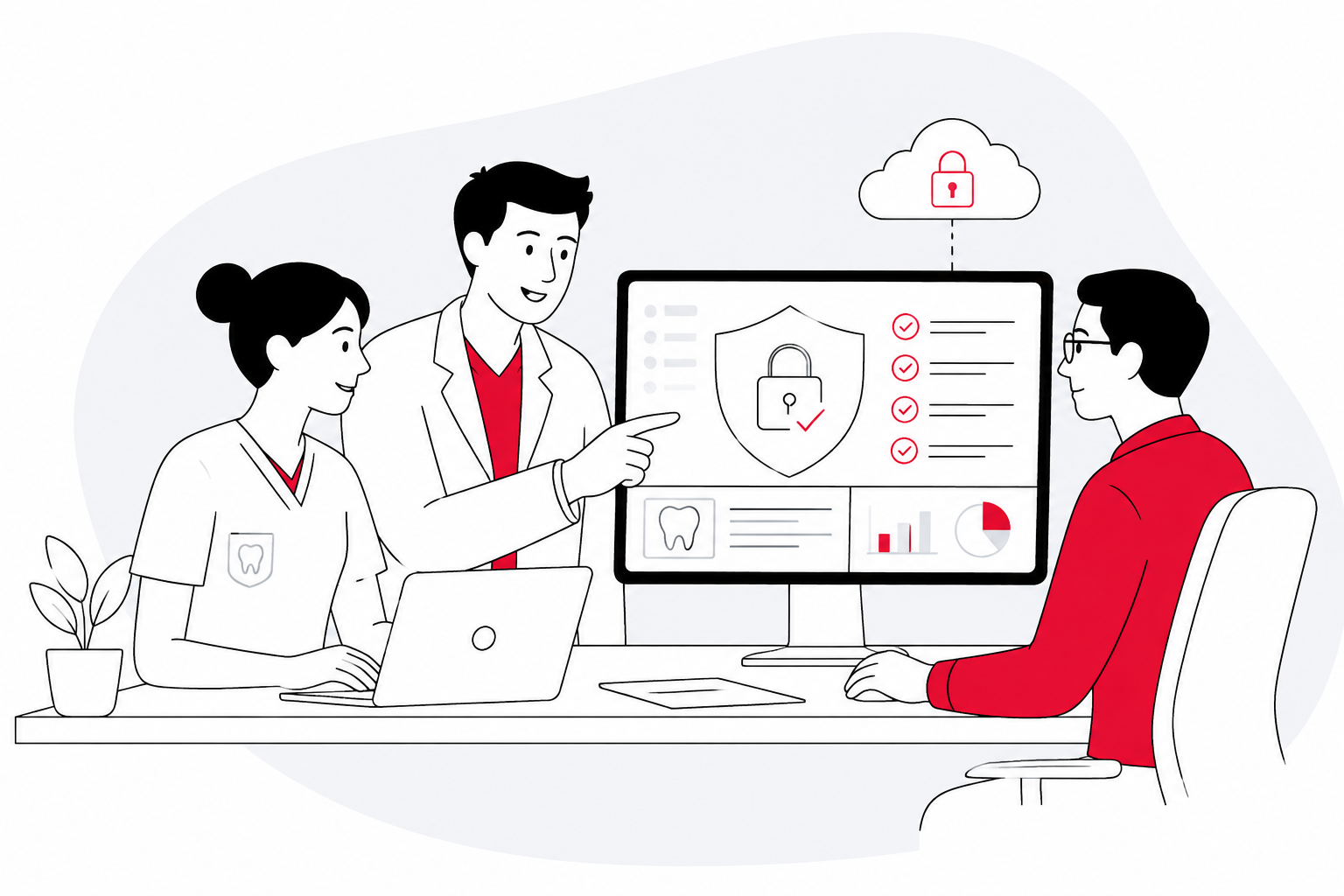
A medical office can't afford to stop
When the computers or the EHR (your electronic health records system) go down, the front desk can't check patients in, providers can't see charts and the waiting room fills up.
On top of that, every practice that handles patient records must follow HIPAA, the federal law that says how patient information is stored, shared and protected. One breach or one patient complaint can start a federal investigation.
We keep your technology running every day and build the HIPAA safeguards into it, so you are ready if anyone asks.
Who We Work With
Practices that handle patient records every day
- Physician offices and family practices
- Outpatient clinics
- Specialty practices
- Physical, occupational and speech therapy
- Behavioral and mental health practices
- Chiropractic and wellness clinics
- Dental practices
Common Problems
What gets in the way at most practices
The system is down and patients are waiting
Slow or old computers, a dropped connection or a frozen EHR can stall the whole schedule, and there is no one to call.
Fake emails and invoices
Phishing emails that look like a vendor, an insurer or a patient trick staff into clicking or paying. One click can open the door to ransomware, which locks your files until a ransom is paid.
Lost files and no real backup
A failed hard drive or a stolen laptop can mean lost patient records, and a reportable breach if the data was not protected.
HIPAA paperwork no one has time for
Risk analysis, staff training, vendor agreements: easy to put off, and expensive if an investigator asks for them and they are missing.
What We Take Care Of
One team for your practice's technology and HIPAA safeguards
Everyday IT support
A real person to call when something breaks, on-site or remote, so your day keeps moving.
Managed IT servicesSecurity and HIPAA safeguards
Two-step login (MFA) on every system with patient data, encryption that scrambles records so a lost device is useless to a thief, and staff training that is documented.
CybersecurityBackups you can restore
Patient records and files backed up, encrypted and tested, so a failure or ransomware attack does not mean starting over.
Backup & recoveryMicrosoft 365 and secure email
Email, files and accounts set up safely, with protection against phishing and a secure way to send patient information.
Microsoft 365 supportNetwork and Wi-Fi
Fast, reliable connections in every exam room, with guest Wi-Fi kept separate from the systems that hold patient data.
Network supportYour EHR, devices and printers
We keep the EHR, practice software, workstations, scanners and printers working together, and work with your software vendors when needed.
Why RedCube
One local partner instead of a call center
Local team in Wilmington
On-site visits across Delaware, Pennsylvania and New Jersey, plus quick remote help.
Plain English, and we sign the BAA
We explain what matters without jargon, and we sign a Business Associate Agreement, the HIPAA contract every IT vendor that touches patient data needs.
We watch for problems early
Proactive monitoring spots failing drives, missed updates and suspicious activity before they turn into downtime or a breach.
Predictable monthly cost
Managed IT plans start at $50 per user per month. Compliance work is scoped and quoted up front, with no surprise invoices.
Questions practices ask us
Does a small practice really need a HIPAA Security Risk Analysis? +
Yes. Every practice covered by HIPAA must have one, no matter its size. It is a written review of where patient data lives and what could put it at risk, and it is the gap investigators find most often. We build it, document it and update it every year.
Our EHR is in the cloud. Doesn't the vendor take care of HIPAA? +
Only partly. Your EHR vendor protects its own systems, but your practice is still responsible for your computers, email, Wi-Fi, passwords, staff training and vendor agreements. A Business Associate Agreement shares the work, not the accountability.
Will you sign a Business Associate Agreement with us? +
Yes. As your IT provider we sign our own BAA with your practice, and we help you track signed agreements with your other vendors, such as your EHR host and billing service.
What happens if we have a breach? +
Affected patients and HHS must be told within 60 days of discovery, and the media too if 500 or more patients are affected. Those larger breaches are also listed on a public HHS website. HIPAA fines start at roughly $145 per violation and can pass $2.19 million per year for neglect that is not fixed. A tested response plan, good backups and encryption make a breach far less likely and far easier to handle.
Is the 2026 HIPAA update already in effect? +
Not yet. It is a proposed rule from HHS. It would make two-step login (MFA) and encryption required for everyone and call for yearly risk assessments and security testing. Practices that put these in place now avoid a rush later.
How much does it cost, and how long does it take to get compliant? +
Managed IT plans start at $50 per user per month. We start with a free review of your systems and tell you plainly what is missing. Fixing the gaps, such as MFA, encryption, your risk analysis and vendor agreements, typically takes 2 to 4 weeks, depending on your practice.

Find out where your practice stands
One conversation, no obligation. We'll tell you what's working, what's missing and what it takes to fix it.